

AstroBoost is a project that I created and manage for the Royal Astronomical Society (RAS). It is funded by a STFC Spark Award and run in partnership with the James Webb Space Telescope UK Campaign, Guildford and Newbury Astronomical Societies (GAS/NAS), and Hampshire Astronomical Group (HAG).
This project has two main strands.
The first is a survey of southern astronomical societies to determine their current public engagement activity, aspirations and barriers. No such data had been previously collected. The survey data has not yet been published but it is clear that the large majority of societies count public engagement as central to their aims and are active in this area. Together they engage a large number of people from diverse public audiences.
The second strand is development of a suite of Webb telescope public engagement resources for the use of the three partner societies. The types of resources to be developed were determined from the specific needs of these societies, as agreed during a meeting in April. This meeting was attended by all three societies and also Alastair Bruce from the Webb telescope UK campaign.
The societies requested a primary focus on physical props and demos which could be assembled into a flexible 30-60 minute demo-led show for ages 8-12yr. Due to the audience age, it was decided the activities should concentrate on explaining what infrared is, and how it allows us to see into nebulae. The resources were then developed, with additional opportunities for the societies to comment on and guide the process.
On Sunday 16 September, we met at Hampshire Astronomical Group’s HQ at Clanfield Observatory, Hampshire. This is a fantastic site with multiple observatory domes, a 24 inch telescope, and meeting room that was perfect for our requirements. Many thanks to HAG for providing this venue for free. Again we were delighted to have Alastair Bruce join us from Edinburgh, giving us a broader perspective on the campaigns activities and practical strategies for communicating the topic clearly.
Before I go into details, here are some pictures from the day:
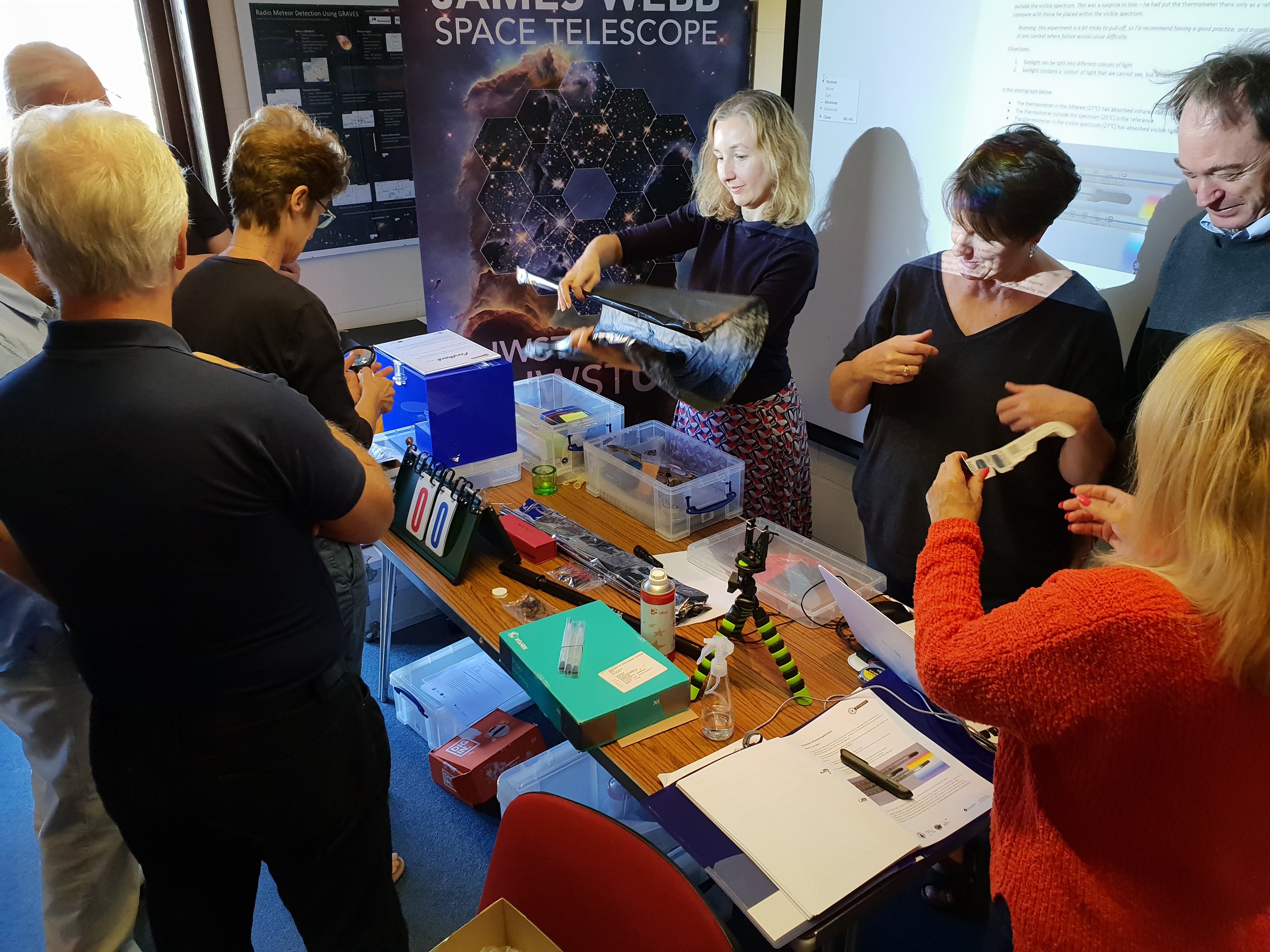
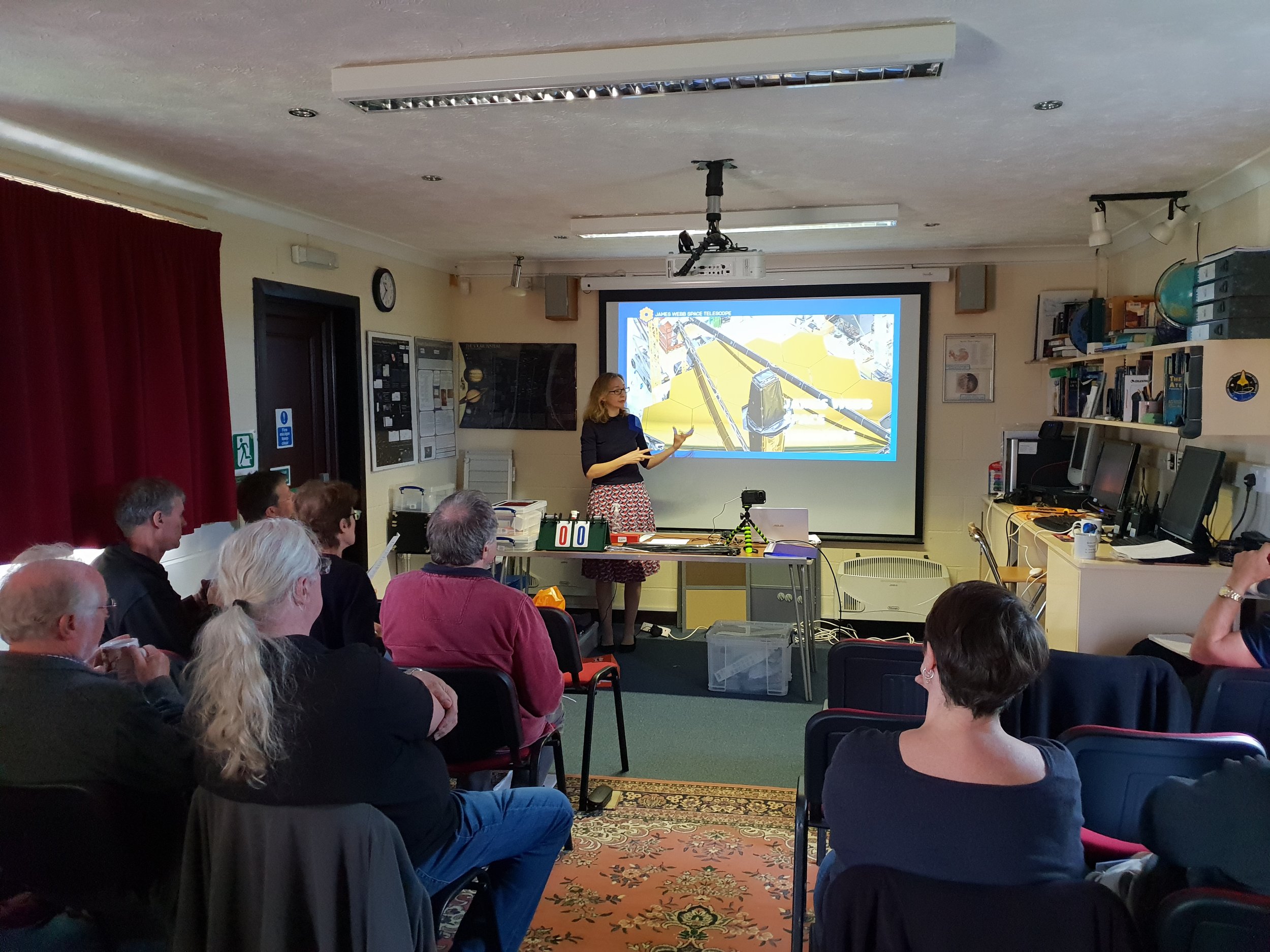
After a brief introduction outlining the project and with a sneak peak of data from the survey, the training day kicked off with a Skype talk from Webb scientist Steve Wilkins (Sussex University). This gave the astronomy society members a chance to ask higher-level technical questions which Steve handled superbly.
The resources were presented, with additional information about consideration of gender, unconscious bias and child protection. Written resources include guidance for use of volunteers, teaching strategies, and how the topic links to concepts that children encounter in school. There is also an evaluation pack that will be used by the societies. Resources also recieved copies of the excellent Destination Space 2 (ASDC/STFC) Webb content, including background information and scientist interviews.
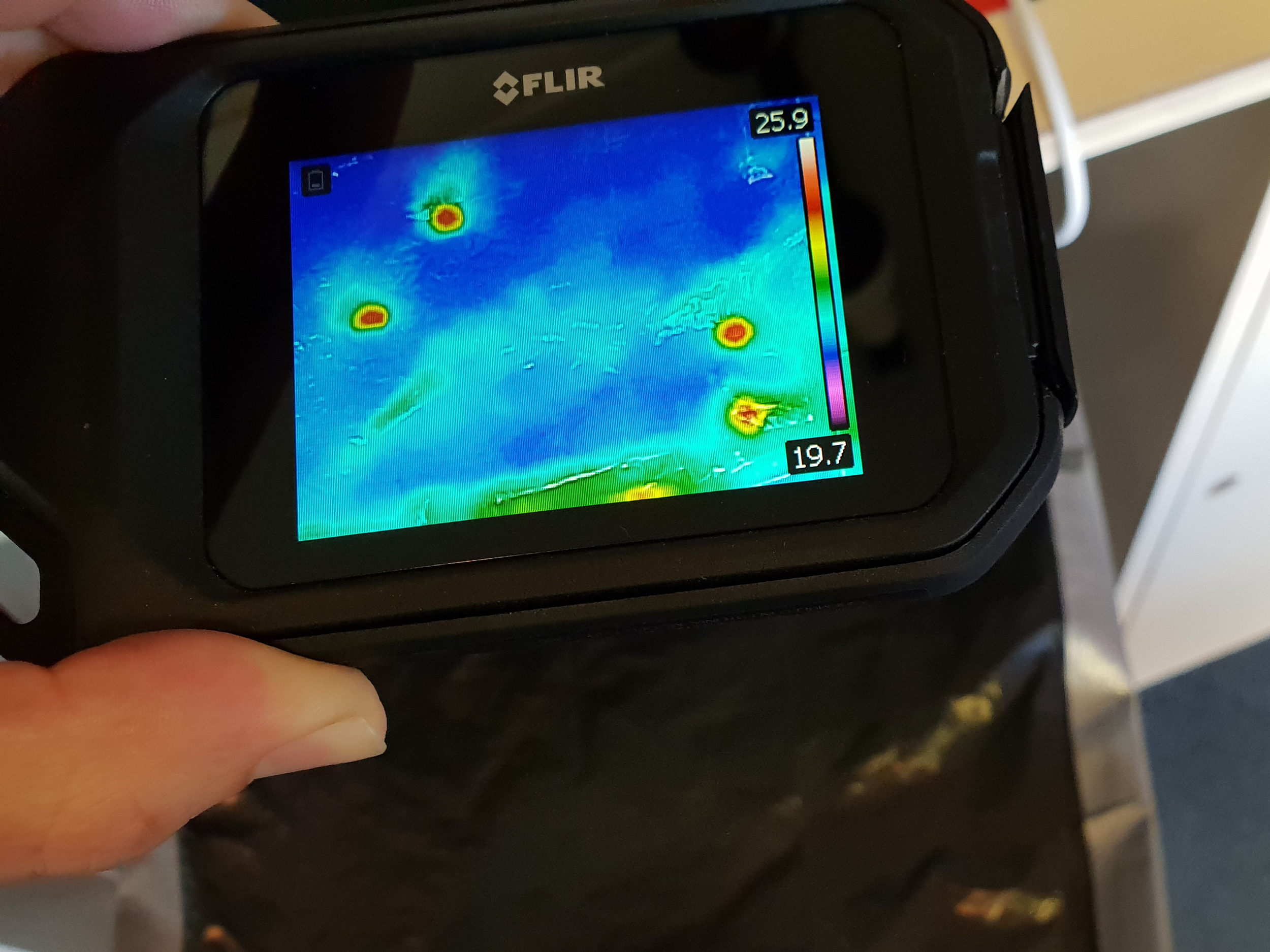
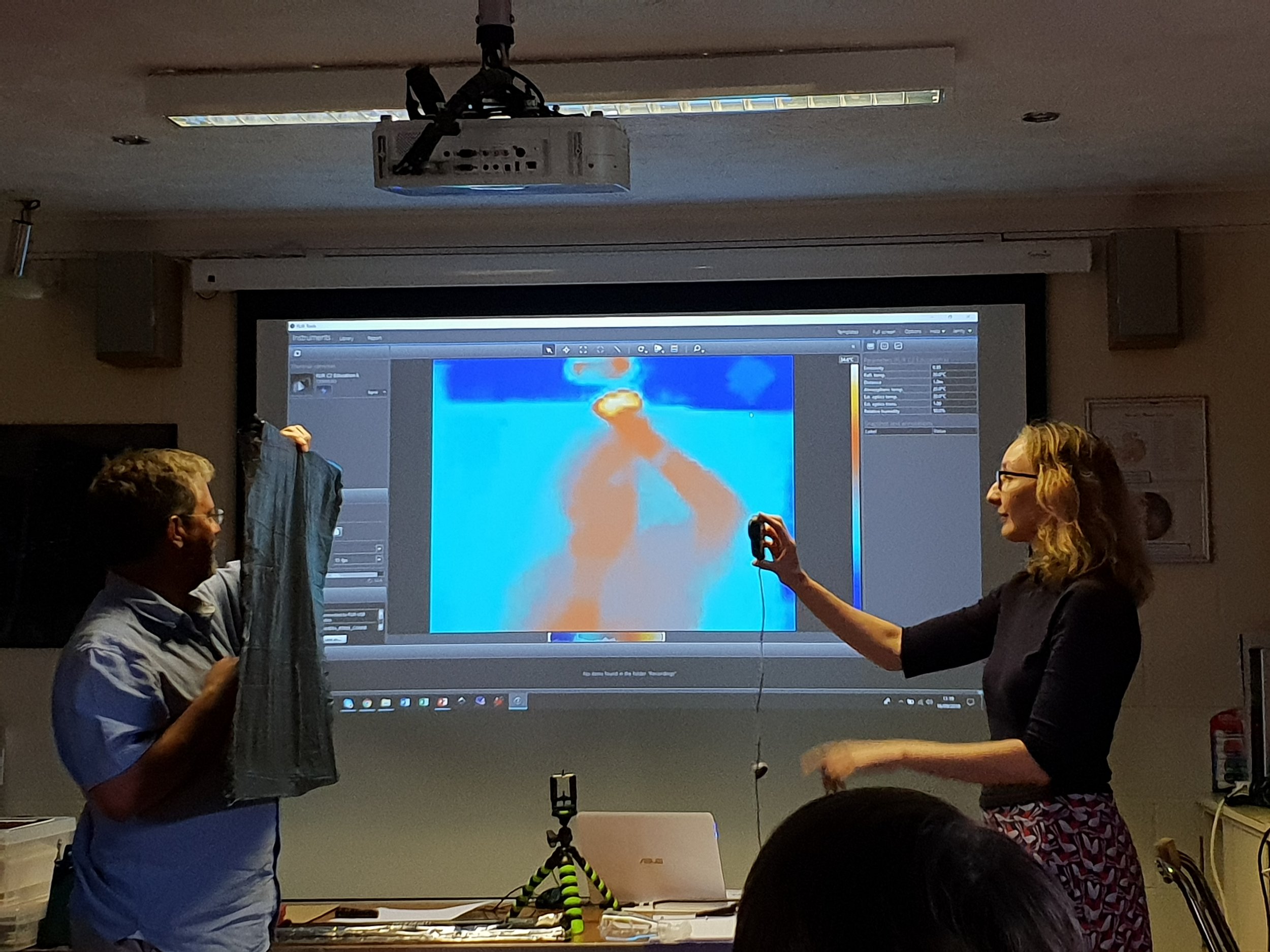
Many of the resources were linked to the demo-led show. This show makes use of a Flir-C2 infrared camera to show how infrared is similar to, but also different from, visible light. The show comes with a full script, suggestions of how to deliver the demos, and outline risk assessments to be completed by the societies. All written/Powerpoint resources will soon be available for free download from the Webb Campaign and RAS websites.
Other resources included a pull-up banner, 3D printed Webb model (coming soon) and ‘find the star’ game. Each society also received a set of golden hexagons for building a scale model of the primary mirror, where the completed model is the same size as one segment of the actual mirror. Thanks to the Webb campaign we were able to provide left-over bolts from the telescope’s construction and societies will soon also receive some replica pupil masks.
There was also a fantastic little infrared transmitter and receiver kit, built by Dave Hills (who also constructed the golden hexagons). This is a beautifully made and very engaging device that allows transmission of music; very simple to use but clearly showing how infrared signals can be blocks or suffer interference. This was tested after the main training and has been left with HAG, but I will be trying to get two more of these constructed so that the societies don’t need to share.
So now it is up to the societies to work out how they might best use the resources, and adapt the activities and show to their needs. They will be using the kits at their events, some of which I will be attending to carry out additional evaluation. Finally we will meet up again in March to discuss how things went (both the resources and project as a whole) to feed into the final project report which will be submitted to our funders STFC that month.

